Nottingham Maternity Review Exposes Systemic Failure
Published on: 24/06/2026
“Their Voices Must Now Become the Catalyst for Lasting National Change”
Nottingham Maternity Review Exposes Systemic Failures Affecting Thousands of Families
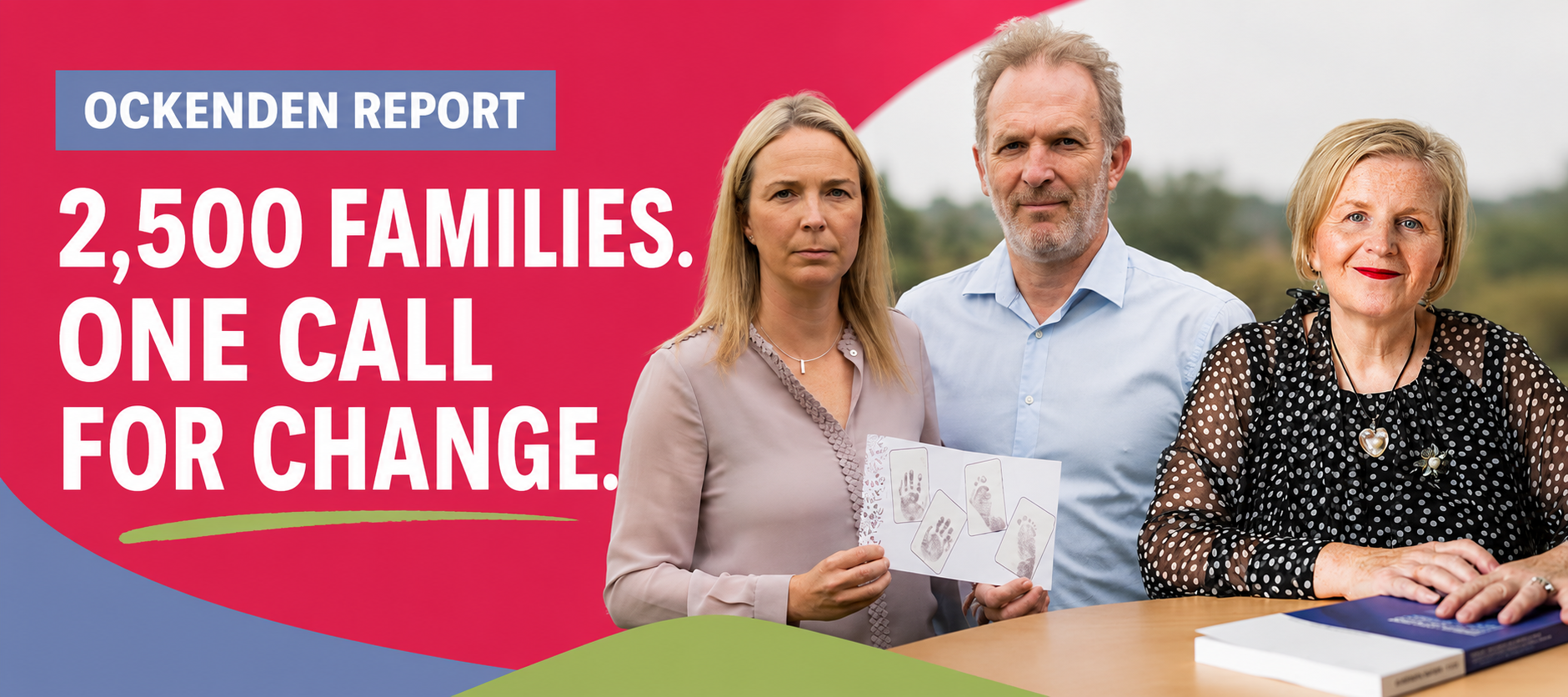
The publication of Donna Ockenden’s Independent Review into maternity services at Nottingham University Hospitals NHS Trust (NUH) has revealed what is believed to be the largest maternity investigation in NHS history, exposing years of systemic failures, missed opportunities and a culture that repeatedly failed women, babies and families.
The review examined maternity and neonatal care provided between 2012 and 2025 and was commissioned after years of campaigning by bereaved families seeking answers following avoidable deaths and life-changing injuries.
What began as a small group of parents demanding accountability eventually grew into a review involving nearly 2,500 families and more than 800 current and former NHS staff. The willingness of both families and staff to come forward and share their experiences has been instrumental in exposing the scale of the issues identified by the review.
In her opening letter to the Secretary of State for Health and Social Care, Donna Ockenden delivers one of the most damning assessments of an NHS maternity service in recent years.
“Poor practice is not investigated; learning is not integrated; and mothers and babies are failed by an organisation they should be able to rely upon absolutely during a period of acute vulnerability in their lives.”
The Scale of the Review
The numbers behind the report are unprecedented.
The review assessed over 2,000 maternity cases and nearly 1,000 neonatal cases. Clinical reviewers found that 444 maternity cases involved care graded as causing significant concern, representing 21% of all maternity cases reviewed. In neonatal services, 76 cases were graded as significant concern, representing 6% of all neonatal cases reviewed.
The report found evidence of recurring failures stretching back more than a decade, including:
Failure to listen to women and families.
Chronic staffing shortages.
Poor escalation of clinical concerns.
Bullying and toxic workplace cultures.
Delayed investigations into serious incidents.
Failure to learn from previous mistakes.
Weak governance and leadership oversight.
Poor communication following incidents and bereavements.
Perhaps most concerningly, Ockenden states that many of these issues had been known about since at least 2010.
“Many of the issues described in this Report have been known about at NUH since at least 2010.”
A Persistent Failure to Listen
One of the strongest themes running throughout the report is the repeated dismissal of women’s concerns.
The review identified:
“A persistent failure to listen to and believe mothers and fathers.”
Families consistently described feeling ignored when reporting reduced fetal movements, changes in their baby’s condition, labour concerns or deteriorating maternal health.
Women reported:
Loss of autonomy.
Inadequate communication.
Delayed observations.
Failures in escalation.
Exclusion from decision-making.
Feeling unsupported during labour and postnatal care.
The report notes that these experiences spanned more than a decade and could not be explained away as isolated incidents or individual mistakes.
The Human Cost
The review is built upon stories of avoidable tragedy.
Among the cases highlighted are:
Harriet Hawkins
Harriet Hawkins died before birth in April 2016 following failures in recognising obstructed labour.
An external review later concluded her death was avoidable.
The report states that her parents then endured:
“Almost ten years of obfuscation, delay, callousness and incompetence.”
Ockenden describes Harriet’s case as the catalyst that ultimately led to the national review.
Wynter Andrews
The death of Wynter Andrews in 2019 was described by HM Coroner as:
“A clear and obvious case of neglect.”
The coroner found that a catalogue of failures contributed to her death and concluded that earlier delivery would likely have prevented the tragedy.
Kouper Needham
One-day-old Kouper Needham died after concerns about feeding difficulties were repeatedly dismissed.
The review found failures in assessment, escalation and postnatal care.
A Workforce Under Pressure
The review also exposes the experiences of staff working within maternity services.
More than 800 current and former employees contributed evidence.
Their testimony revealed an organisation struggling with workforce pressures and cultural issues. Many staff showed considerable courage in speaking up about the concerns they witnessed and experienced, despite a culture that often left individuals feeling unable to raise issues safely.
Among the most concerning findings:
Only 11% of staff felt staffing levels were sufficient for workload demands.
59% reported staff regularly working longer hours than was safe or sustainable.
More than 40% had witnessed or personally experienced bullying.
The report repeatedly references a “bullying and toxic culture” and identifies concerns regarding intimidating cliques, poor psychological safety and staff fears about raising concerns.
Donna Ockenden writes:
“Both mothers and staff ‘on the ground’ in Nottingham have reported to my team the damaging results of being bullied by a small minority of powerful leaders who had been allowed to infect the unit.”
Governance Failures and Missed Warnings
The report concludes that repeated warnings were missed.
Between 2015 and 2022, six external reviews of maternity services were commissioned.
All highlighted concerns relating to governance, leadership, culture and patient safety. Yet the same themes continued to reappear.
The review found:
“Known issues, challenges and failings in maternity were at various times sidelined and ignored, deemed too difficult or were of insufficient priority.”
Investigations into serious incidents were often delayed.
Learning was not embedded.
Families were left without answers.
Similar incidents continued to occur.
Eight Immediate and Essential Actions
Alongside its findings, the review sets out eight Immediate and Essential Actions that must now be implemented across maternity services in England to improve safety, accountability and outcomes for women and babies.
1. Listening to Women and Families
Ensuring women’s concerns are heard, respected and acted upon.
2. Workforce Planning and Safe Staffing
Addressing staffing shortages and ensuring safe workforce levels.
3. Training and Multi-Professional Learning
Improving mandatory training and multidisciplinary learning.
4. Risk Assessment Throughout Pregnancy
Strengthening risk assessment, escalation and clinical review throughout the maternity journey.
5. Incident Investigation and Family Involvement
Ensuring investigations are timely, transparent and involve families.
6. Governance and Board Accountability
Strengthening leadership oversight and organisational accountability.
7. Culture, Teamwork and Psychological Safety
Tackling bullying and creating environments where staff can safely raise concerns.
8. Mothers Who Have Died and Post-Death Care
Improving maternal death reviews, bereavement care and support for affected families.
Together, these actions are intended to address the recurring themes identified throughout the review and provide a national framework for safer maternity care.
MAMA Academy’s Response
MAMA Academy welcomes the publication of this landmark review and stands with every family and every member of staff whose experiences and testimony have shaped its findings.
The courage shown by nearly 2,500 families in coming forward has created one of the most important maternity safety reviews ever undertaken in the UK. We also recognise the more than 800 current and former NHS staff who chose to speak openly about their experiences, concerns and observations. Their willingness to come forward has been vital in exposing the failures identified throughout this review and helping to drive meaningful change.
Their testimony has exposed failures that must never be repeated.
The review reinforces a principle that sits at the heart of safer maternity care:
Listening Saves Lives
When women report reduced fetal movements, changes in symptoms, concerns about their baby’s wellbeing or worries about their own health, those concerns must be heard, taken seriously and acted upon.
The findings of this review demonstrate the devastating consequences when that does not happen.
We welcome the report’s emphasis on listening to women, improving escalation pathways, embedding Martha’s Rule within maternity services and strengthening accountability across the NHS.
As Donna Ockenden concludes:
“The families of Nottingham have shown extraordinary courage, dignity and determination in the face of the devastating consequences that continue to mark their lives, and their voices must now become the catalyst for lasting national change.”
For MAMA Academy, this report is not simply about looking back at what went wrong.
It is about ensuring that every woman is listened to, every concern is respected and every baby has the safest possible start in life.
The Challenge Ahead
The challenge now is not understanding what needs to change.
The challenge is making sure it finally does.